- CIOsurge
- Posts
- 🤖 Agentic Systems Change What "Access" Really Means
🤖 Agentic Systems Change What "Access" Really Means
Agentic Access Redefines Risk, AI Infrastructure Costs Accelerate, Workforce Optimism Lags Execution


Aimply Team & Zack Tembi
January 05, 2026

Non-Human Identity Risks Emerge, Salesforce Tightens Data Access, FinOps Clarifies Multicloud Commitments

Powered by Single Fin
Welcome to this week’s edition of CIOsurge!
This week:
From my conversation with Michael Silva, agentic systems force a rethink of access design, because when systems can decide and act, permissions define the true blast radius.
IDC warns AI infrastructure costs will overshoot forecasts through 2027, pushing CIOs to evolve FinOps into a model and workload level discipline rather than simple spend tracking.
New survey data shows employee confidence in AI is eroding as leadership vision outpaces training, tooling, and clear execution paths, creating a widening adoption gap.
Let’s make this week a game-changer.
Stay sharp. Stay ahead.

🥂 You’re Invited, AI and Identity Forum

I’m hosting a CIOsurge Technology Executive Forum in NYC on AI, identity, and the new attack surface. No presentations, no sales pitches, just a good room of senior IT leaders comparing notes on AI-native security, non-human identity exposure, and what defending at machine speed actually requires.
If this is already on your 2026 roadmap, I’d love to have you there. Space is limited and registration is subject to approval.
📅 Date: Thursday, January 22, 2026 | 5:00 PM - 8:00 PM
📌 Location: Bar Jamon, New York, NY | 125 E 17th St, New York, NY 10003
🔗 Link: Request an invitation here
💡 Guest Expert Insights: Michael Silva
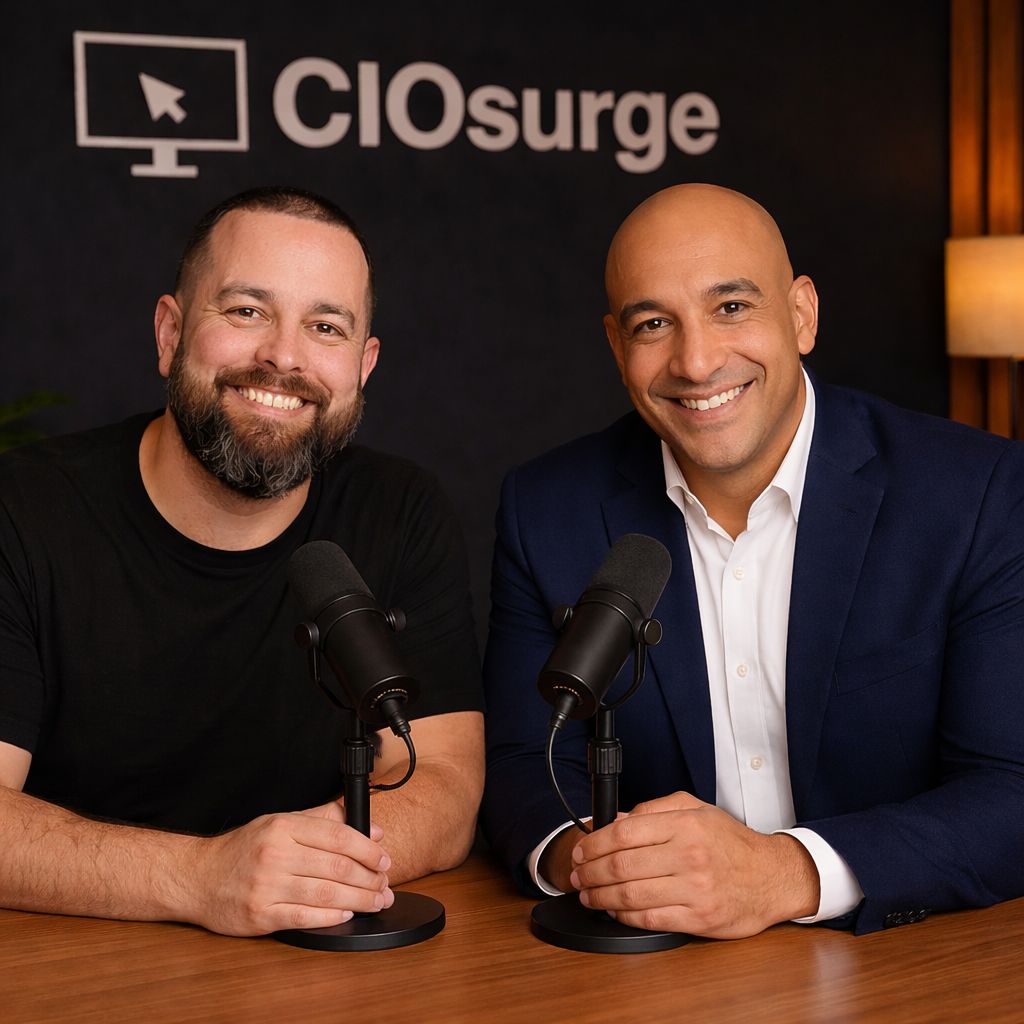
🤖 Agentic Systems Change What "Access" Really Means
In my conversation with Michael Silva, he drew a sharp line between traditional automation and what agentic systems introduce. Automation outsourced actions. Agentic systems start to outsource judgment.
When a system can decide when to act, where to act, and what tools to touch, identity and access controls are no longer just guardrails. They define the scope of decision-making itself. Overly broad permissions stop being a convenience issue and become a compounding risk.
Michael’s point was not theoretical. As organizations experiment with agents that span systems and data, access design becomes the difference between controlled autonomy and uncontrolled blast radius.
💸 IDC warns AI infra costs will blow past forecasts through 2027

IDC predicts Global 1,000 companies will underestimate AI infrastructure costs by 30% through 2027 as AI spend behaves less like predictable cloud consumption and more like volatile, compute-heavy demand. The article highlights cost drivers beyond GPUs (continuous inference, networking, tokens, monitoring and governance overhead) and argues FinOps must expand from spend tracking into model and workload-level optimization.
If you’re budgeting AI like a normal cloud workload, you’re probably already behind. AI introduces compounding cost curves: bigger models can drive disproportionate compute, inference runs nonstop, and the “safety” layer (logging, validation, drift monitoring) can rival or exceed inference costs. That’s where forecasts quietly break.
The practical move is to evolve FinOps into an AI-aware cost-and-performance function: instrument inference and retrieval pipelines, enforce model right-sizing, and fix GPU underutilization with better scheduling. Pair that with hybrid architecture discipline so you can shift workloads as pricing and hardware cycles change, because the infrastructure math is moving faster than annual budgeting can keep up.
- Zack Tembi
🧭 AI optimism falters as leadership and training lag

A new survey shows executives are far more optimistic about AI than employees, who cite weak training and unclear roadmaps as major barriers. While most workers use AI daily, only 3% of companies are highly transformed, with nearly three-quarters still in early stages, highlighting a widening gap between AI ambition and execution.
This gap should worry every CIO. Employees aren’t resisting AI because they don’t see the upside, they’re frustrated because they don’t see direction. When leadership talks transformation but doesn’t translate it into tools, training, and permission to experiment, skepticism is a rational response.
AI adoption doesn’t scale through hype decks or isolated pilots. It scales when leaders model usage, define clear use cases, and invest in practical upskilling tied to real workflows. If we want confidence on the front lines, we have to replace abstract promises with visible wins and consistent guidance.
- Zack Tembi
🗞️ At A Glance

💡 CIO Spotlights
1-800-FLOWERS CIO Alex Zelikovsky steps in to accelerate digital transformation

Alex Zelikovsky was named CIO of 1-800-FLOWERS.COM, reporting to CEO Adolfo Villagomez and leading enterprise tech, data, cybersecurity, and AI initiatives.
Zelikovsky brings 25+ years of experience, most recently as global CIO at Pitney Bowes, with deep roots in enterprise modernization and omnichannel growth.
His appointment signals a push to use AI, data, and platforms to personalize customer experiences and drive operational efficiency.
Starbucks brings in Amazon veteran Anand Varadarajan as CTO

Starbucks appointed Anand Varadarajan as chief technology officer effective Jan. 19, backing CEO Brian Niccol’s push to modernize store tech and labor efficiency.
Varadarajan spent 19 years at Amazon, leading technology and supply chain systems for its global grocery business, with earlier experience at Oracle.
The hire follows leadership turnover in the CTO role and comes as Starbucks shows early gains from its U.S. turnaround efforts.
Reply